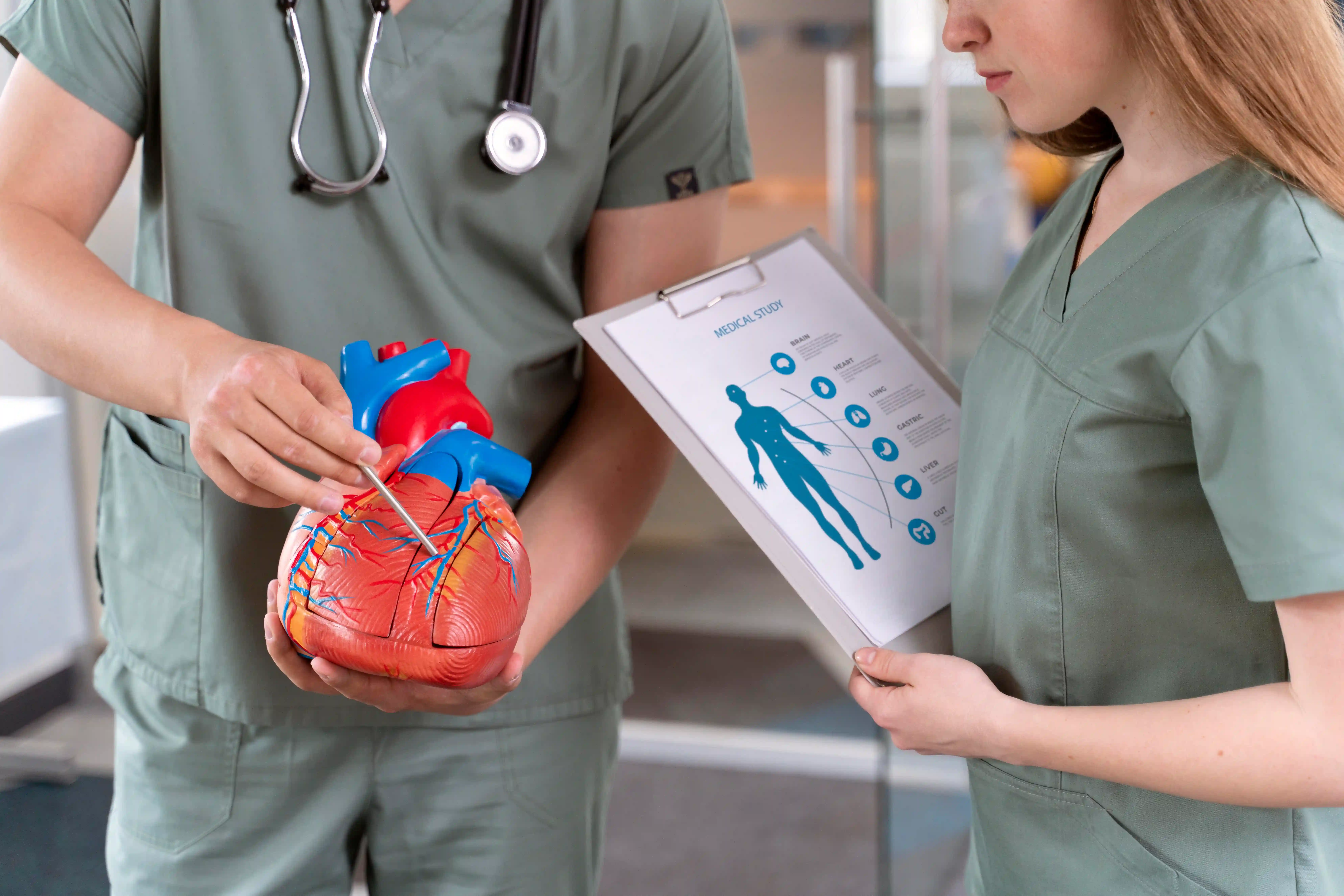
What is a cardiology check-up?
The cardiology check-up — commonly known as a heart check-up — is a set of tests performed to protect heart health. These tests are carried out in our practice and results can be available in a short time.
When should people at risk for heart disease or with a family history undergo screening?
Hundreds of thousands of heart attacks occur worldwide each year, and many end fatally because they are not diagnosed or are diagnosed late. As in many places, there is a widespread misconception that a cardiology screening should be done only at an advanced age. However, those with a family history of heart disease or unexplained sudden deaths under the age of 40–50 should see a specialist regardless of age and have a yearly check. Questions such as: What causes sudden death or blockage of the arteries supplying the heart? Is it treatable? Are there familial factors? With early diagnosis, many conditions can be treated successfully. For example, if someone has family losses due to such problems, they should be examined every 5 years until age 40, and yearly after 40.
For which occupations is a cardiology check recommended?
People work until retirement to sustain life, but some jobs are more physically/mentally demanding and can adversely affect health. While there is no single target group, a check-up is advisable for anyone who—due to increased workload—feels fatigued or on some days even chest pain. For example: public transport drivers, pilots, mechanics, surgeons, teachers, police officers, office staff, service-sector employees who face crowds, and professional athletes should be examined yearly.
How is the cardiology evaluation performed?
Tests such as ECG (electrical activity recording during cardiac contraction), echocardiography (ultrasound of the heart), and exercise testing (ergometry on a bicycle under cardiologist supervision) are tailored to the individual; additional studies are performed as needed. Based on results, the physician may request ambulatory blood pressure or rhythm Holter monitoring. Blood tests such as LDL, HDL, CRP and triglycerides may also be assessed.
In which situations does the evaluation reduce risk?
Cardiovascular diseases do not always give clear symptoms. Many people consider themselves healthy until late stages. Heart diseases vary from person to person, and many sudden deaths—especially in the young—arise from these. Tests such as ECG, echocardiography and stress ECG can detect disease. Cardiologic and blood tests, which initiate recognition and treatment of individual cardiovascular risk, should not be postponed; they benefit both the person and society. No risk is more important than our life.
Höri • Embrach